1.0 ACPE contact hour
Target Audience
The educational design of this activity addresses the needs of specialists in infectious disease, hematology/oncology, critical care, obstetrics/gynecology, dermatology, urology, microbiology, and transplant surgery; primary care providers; hospital/health-system/specialty pharmacists; nurse practitioners; and physician assistants involved in the treatment of patients with herpes simplex virus (HSV).
Statement of Need
In immunocompromised patients, reactivation of HSV is frequently prolonged, atypical, and resistant to standard antiviral therapy. The only FDA-approved salvage agents require intravenous administration and carry substantial toxicity burdens that often limit their use. Clinicians face knowledge gaps in recognizing atypical presentations, applying current diagnostic definitions, and selecting appropriate salvage therapy. A novel oral helicase–primase inhibitor is under FDA Priority Review, underscoring the need for timely education on emerging treatment options for this vulnerable population.
Goal
The goal of this activity is to educate clinicians about HSV infections in immunocompromised patients, including clinical presentation, use of diagnostic tests and clinical definitions, effective treatment strategies, the importance of considering resistance, the potential for atypical clinical presentations, and a new class of agents under regulatory review that may offer clinical advantages over existing salvage therapies.
Learning Objectives
After completing this activity, the participant should be better able to:
- Discuss the risk factors and resistance mechanisms that may occur in immunocompromised patients with HSV.
- Describe the presentation of HSV lesions in immunocompromised patients, highlighting variations in atypical cases.
- Identify HSV reactivation in immunocompromised patients, using appropriate clinical definitions and recognizing the need for diagnostic testing.
- Develop strategies to treat refractory HSV in immunocompromised patients, focusing on maximizing effectiveness, improving administration schedules, and minimizing toxicities.
Faculty


Physician Accreditation Statement

This activity has been planned and implemented in accordance with the accreditation requirements and policies of the Accreditation Council for Continuing Medical Education (ACCME) through the joint providership of Global Education Group (Global) and Applied Clinical Education (ACE). Global is accredited by the ACCME to provide continuing medical education for physicians.
Physician Credit Designation
Global designates this enduring activity for a maximum of 1.0 AMA PRA Category 1 Credit™. Physicians should claim only the credit commensurate with the extent of their participation in the activity.
Pharmacist Accreditation Statement

Global is accredited by the Accreditation Council for Pharmacy Education (ACPE) as a provider of continuing pharmacy education with Commendation.
Pharmacist Credit Designation
Global designates this continuing education activity for 1.0 contact hour (0.01 CEUs) of the ACPE (Universal Activity Number - 0530-9999-26-027-H01-P).
This is a knowledge-based activity.
Global Contact Information
For information about the accreditation of this program, please contact Global at (303) 395-1782 or cme@globaleducationgroup.com.
Instructions to Receive Credit
In order to receive credit for this activity, participants must participate in the activity and complete and pass the post-test with a minimum score of 70%. In addition, participants must complete the evaluation. CME certificates will be sent via email to those who complete the activity successfully.
System Requirements
PC: 1.0 GHz or faster 64-bit processors (2+ cores), 4 GB RAM, 64 GB storage, UEFI secure boot, and TPM 2.0. For better performance, 8 GB+ RAM and SSD storage are recommended
MAC: Mac with an Apple silicon processor (M1 or newer) or Intel 64-bit processor, 4 GB RAM minimum, and 64 GB available storage. For optimal performance, 8 GB or more RAM and SSD storage are recommended
Browser: latest version of Chrome, Safari, Edge, or Firefox with cookies and JavaScript enabled
Internet connection: broadband internet connection with a minimum speed of 5 Mbps recommended for smooth streaming and interactive features
Fee Information and Refund/Cancellation Policy
There is no fee for this educational activity.
Disclosures of Relevant Financial Relationships
Global adheres to the policies and guidelines, including the Standards for Integrity and Independence in Accredited CE, set forth to providers by the ACCME and all other professional organizations, as applicable, stating those activities where continuing education credits are awarded must be balanced, independent, objective, and scientifically rigorous. All persons in a position to control the content of an accredited continuing education program provided by Global are required to disclose all financial relationships with any ineligible company within the past 24 months to Global. All financial relationships reported are identified as relevant and mitigated by Global in accordance with the Standards for Integrity and Independence in Accredited CE in advance of delivery of the activity to learners. The content of this activity was vetted by Global to assure objectivity and that the activity is free of commercial bias.
All relevant financial relationships have been mitigated.
The faculty have the following relevant financial relationships with ineligible companies:
- Yeon Joo Lee: Contracted research (principal investigators must provide information, even if received by the institution): AiCuris, Eurofins-Viracor, Merck Sharp & Dohme; other: AiCuris (travel support)
- Jonathan Hand, MD: Consulting fees (eg, advisory board): AstraZeneca, Innoviva, Pfizer; contracted research (principal investigators must provide information, even if received by the institution): AstraZeneca, Janssen, Karius, Pfizer, Scynexis
The planners and managers have the following relevant financial relationships with ineligible companies: The planners and managers at Global and ACE have no relevant financial relationships to disclose.
Disclosure of Unlabeled Use
This educational activity may contain discussion of published and/or investigational uses of agents that are not indicated by the FDA. Global and ACE do not recommend the use of any agent outside of the labeled indications.
The opinions expressed in the educational activity are those of the faculty and do not necessarily represent the views of any organization associated with this activity. Please refer to the official prescribing information for each product for discussion of approved indications, contraindications, and warnings.
Disclaimer
Participants have an implied responsibility to use the newly acquired information to enhance patient outcomes and their own professional development. The information presented in this activity is not meant to serve as a guideline for patient management. Any procedures, medications, or other courses of diagnosis or treatment discussed in this activity should not be used by clinicians without evaluation of patient conditions and possible contraindications on dangers in use, review of any applicable manufacturer’s product information, and comparison with recommendations of other authorities.
This activity is jointly provided by
Global Education Group and Applied Clinical Education.

This activity is supported by an educational grant from AiCuris.
This activity is distributed by Infectious Disease Special Edition, CMEZone, and Pharmacy Practice News.

false
*You must be logged in to see results data.
Herpes simplex virus (HSV) ranks among the most prevalent human infections worldwide. According to estimates from the World Health Organization, 3.8 billion individuals younger than 50 years are infected with HSV-1, and 520 million people aged 15 to 49 years are infected with HSV-2.1 In the United States, more than half of adults are HSV-1–seropositive and nearly 1 in 6 are HSV-2–seropositive.2 For most people, HSV is a manageable issue, involving periodic, self-limited outbreaks that respond reliably to a short course of oral antiviral therapy. For the growing population of patients living with immunocompromising conditions, however, the clinical picture is substantially more complex.

In immunocompromised hosts—including recipients of hematopoietic stem cell transplants (HSCT) or solid organ transplants (SOT), patients receiving intensive chemotherapy or immunosuppressive therapy, and individuals with advanced HIV—HSV reactivation can be frequent, prolonged, and severe. Lesions may be atypical, deep, or necrotizing; visceral or disseminated disease can occur; and standard antiviral therapy may fail.3-5 The widespread use of prophylactic antivirals in these high-risk populations, although highly effective in preventing disease, has created sustained selection pressure that drives the emergence of resistant HSV strains, leaving clinicians with few options when first-line therapy loses efficacy.3,6 The available salvage agents, foscarnet and cidofovir, require intravenous (IV) administration and are associated with significant renal and metabolic toxicity, which often restricts their use.5,7
Recent advances in the understanding of HSV resistance mechanisms and diagnostic definitions, as well as the development of a novel class of antiviral drugs targeting the viral helicase–primase complex, are reshaping how refractory and resistant HSV infections can be approached in immunocompromised patients. This activity summarizes the virology of resistance, the spectrum of clinical presentations, current diagnostic and treatment approaches, and emerging therapeutic options, including pritelivir, which has shown superior efficacy compared with investigator’s choice of therapy (ICT) in a phase 3 trial and is currently under FDA Priority Review.8-10
Role of Host Immunity and Antiviral Pressure
Because HSV-1 seroprevalence exceeds 50% among US adults, the majority of patients who undergo HSCT or SOT or who develop advanced HIV enter their period of immunosuppression already latently infected. This makes the risk for reactivation ever-present.2,3,11 In immunocompetent patients, intact HSV-specific T-cell responses constrain viral replication and limit the severity of reactivation episodes, meaning that antiviral resistance is exceedingly rare outside of prolonged, high-dose exposure.3,6 However, in immunocompromised patients, profound defects in cellular immunity permit sustained viral replication under antiviral pressure, creating conditions favorable for the emergence of resistant variants.
Nucleoside analogue prophylaxis is highly effective at preventing clinical reactivation, but it acts as a continuous selective filter on viral populations at mucosal sites. Although these regimens have substantially decreased the burden of acute HSV disease, they have shifted the clinical challenge toward the subset of patients who develop acyclovir-resistant or multidrug-resistant HSV during periods of sustained immune dysfunction and prolonged antiviral exposure.3,5,6
Molecular Basis of Resistance Selection
Nucleoside analogs, such as acyclovir, valacyclovir, famciclovir, and penciclovir, require phosphorylation by the viral thymidine kinase (TK), which is encoded by the UL23 gene, to become active forms that inhibit the UL30 viral DNA polymerase. TK is critical for viral reactivation in neurons and is the obligate activation step for this drug class.3,6 TK-deficient or TK-altered mutants account for approximately 95% of acyclovir-resistant strains observed in clinical practice and are typically cross-resistant to other nucleoside analogs; UL30 DNA polymerase mutations account for most of the remaining resistance cases and can further diminish susceptibility to nucleotide analogs such as cidofovir and, through mutations at the pyrophosphate binding site, to foscarnet.3,6
In immunocompromised patients with persistent viral replication during prolonged therapy, these mutations can arise and be positively selected, with even modest fitness advantages leading to rapid outgrowth of resistant variants, particularly at mucosal sites where high viral loads and repeated reactivation cycles are common.5,6 The helicase–primase complex, which is encoded by the UL5, UL52, and UL8 genes, defines the target for a mechanistically distinct class of antivirals. Helicase–primase inhibitors, such as pritelivir and amenamevir, do not require TK activation and retain activity against TK-deficient strains and many DNA polymerase-mutant strains.12,13
Resistance Rates and Risk Factors
Acyclovir resistance rates are consistently higher in immunocompromised vs immunocompetent hosts. Among HSCT recipients, resistance has been documented in as many as 14% of patients, particularly in those with prolonged neutropenia, graft-vs-host disease (GVHD), or extended antiviral exposure.3,5 In SOT recipients, resistance rates are lower but still clinically significant, typically ranging from 2% to 3%, with higher rates seen in heart and lung transplant recipients. Individuals with advanced HIV show resistance rates of 3% to 7%, although this prevalence is lower in the context of effective antiretroviral therapy.5,6,14
Risk factors for resistant HSV reflect the interplay of immune suppression depth and antiviral exposure to antiviral medications (Table 1).3,5,6,11,14 Key contributors include prolonged T-cell immunosuppression, sustained high-level viral replication, repeated or extended courses of antiviral treatment, and subtherapeutic drug exposure due to malabsorption or drug interactions.3,11 In HSCT recipients, additional risk factors include human leukocyte antigen-mismatched transplants, the use of T-cell–depleting agents, corticosteroid therapy, myeloid malignancies, relapsed underlying malignancy, and GVHD.3 As prophylactic strategies have become more widespread, cumulative exposure to TK-dependent drugs in high-risk populations has increased, raising concern that resistance may become more prevalent in centers where prolonged antiviral prophylaxis is standard practice.3,5
| Table 1. Risk Factors for Acyclovir-Resistant HSV in Immunocompromised Patients3,5,6,11,14 | ||
| Population | Reported Resistance Rate | Key Risk Factors |
|---|---|---|
| Allogeneic HSCT recipients3,5 | ≤14% | Prolonged neutropenia, GVHD, HLA-mismatched transplant, T-cell–depleting agents, corticosteroids, myeloid malignancy, extended antiviral exposure, relapsed underlying malignancy |
| Solid organ transplant recipients5,14 | 2%-3% (higher in heart, lung) | Intensive induction immunosuppression, treatment for rejection |
| Advanced HIV infection5,6 | 3%-7% (lower in ART era) | Low CD4 count, absence of effective ART, prolonged or repeated antiviral courses |
| All immunocompromised patients3,11 | — | Sustained T-cell immunosuppression, high-level viral replication, subtherapeutic drug exposure (due to malabsorption, drug interactions, renal dose adjustment) |
| ART, antiretroviral therapy; GVHD, graft-vs-host disease; HLA, human leukocyte antigen; HSCT, hematopoietic stem cell transplantation. | ||
These observations highlight the importance of balancing the clear benefits of prophylaxis against the potential risk for selecting resistant strains in patients with sustained immune dysfunction.
Typical HSV Lesions
In immunocompetent hosts, HSV classically presents with grouped, fluid-filled vesicles on an erythematous base involving the orolabial or anogenital regions. In contrast, immunocompromised patients may experience HSV outbreaks that are more extensive, deeper, and slower to heal, with larger areas of confluence and a higher risk for superinfection.3,15 Mucosal involvement of the oral cavity, pharynx, and anogenital region is common in HSCT recipients and individuals with advanced HIV, in whom HSV reactivation can significantly impair oral intake and quality of life.3,15
Atypical Cutaneous and Mucocutaneous Manifestations
Profound or prolonged immunosuppression can lead to atypical HSV lesions that deviate substantially from the classic grouped vesicle pattern. HSV may present as necrotizing skin lesions with ulceration, eschar formation, and tissue destruction mimicking bacterial necrotizing infections or other ulcerative dermatoses (Figure 1).4,16,17 Other atypical morphologies include hypertrophic, wart-like, or verrucous lesions, and deep ulcerative plaques that resemble malignancy, chronic bacterial or fungal infection, or pyoderma gangrenosum.4,15
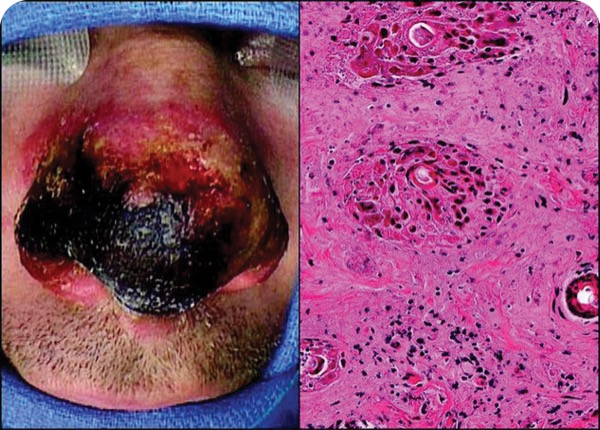 |
| Figure 1. Reactivation of herpes simplex virus involving the nose.17 Left: Photograph of the patient’s nasal lesion caused by HSV reactivation mimicking necrotizing fasciitis. Right: Photomicrograph of the nasal tissue (hematoxylin–eosin stain; original magnification, ×200) obtained by surgical debridement revealing the effects of infection with HSV. Used with permission of the American College of Physicians. From Vinikoor MJ et al. Herpes simplex virus type 2 mimicking necrotizing fasciitis. Ann Intern Med. 2011;155(8):567-568. |
HSV infection may also manifest as herpes vegetans or eczema-like eruptions, particularly in patients with underlying dermatoses or widespread skin barrier disruptions.4,15 Case reports have described granulomatous vasculitis associated with HSV, which appears as persistent, painful papular or nodular lesions in the anogenital region. The histologic features may be misattributed to autoimmune vasculitis if HSV is not considered in the differential diagnosis.18 A high index of suspicion and broad differential diagnosis are essential when evaluating unusual or refractory cutaneous lesions in immunocompromised patients.
Visceral and Systemic Involvement
Although HSV remains predominantly a mucocutaneous pathogen, immunocompromised individuals are at increased risk for visceral and systemic disease. HSV can involve the liver, lungs, adrenal glands, and central nervous system (CNS), presenting as hepatitis, pneumonitis, adrenalitis, or encephalitis.15,19 These manifestations can occur in the absence of any visible mucocutaneous lesions, delaying diagnosis.
Disseminated HSV may present with fever, sepsis-like physiology, multiorgan dysfunction, or neurologic symptoms, particularly in patients with advanced HIV, profound lymphopenia after HSCT, or those undergoing intensive immunosuppression for GVHD or organ rejection.3,19 Therefore, unexplained cases of hepatitis, pneumonitis, or neurologic syndromes in profoundly immunosuppressed patients warrant evaluation for HSV even in the absence of obvious mucocutaneous disease.
Confirmatory Diagnosis of HSV Reactivation
When HSV reactivation is suspected in an immunocompromised patient, confirmatory diagnostic testing of lesion material is essential, both to establish the diagnosis and to provide a specimen for subsequent resistance testing if needed. Polymerase chain reaction (PCR) testing of lesion swab material is the preferred method, offering high sensitivity and specificity for both HSV-1 and HSV-2. Optimal specimens are obtained by unroofing an intact vesicle or firmly swabbing the base of an ulcer or erosion.5,16
In settings where PCR is not immediately available, direct fluorescent antibody testing of lesion scrapings can provide rapid results, but sensitivity is lower than with PCR, particularly in partially healed or crusted lesions.16 Viral culture, although less sensitive than PCR, can yield an isolate suitable for phenotypic susceptibility testing, making it a useful adjunct when resistance testing is anticipated.5,7 Serology is not useful for diagnosing active reactivation in immunocompromised patients and should not be relied upon to confirm an acute episode.
Phenotypic and Genotypic Resistance Testing
Phenotypic antiviral susceptibility testing for HSV is typically performed using plaque reduction assays, in which a viral isolate is exposed to serial dilutions of antiviral drugs to determine the drug concentration required to inhibit 50% of viral replication (EC50) for agents such as acyclovir, foscarnet, and cidofovir.3,5 These assays provide a functional measure of susceptibility and can detect complex resistance patterns, but they require viable virus and specialized laboratory infrastructure, with turnaround times that typically exceed 2 to 3 weeks.6,7 No FDA-cleared commercial HSV phenotypic resistance assays exist. Currently available methods are laboratory-developed tests with limited standardization and complicated interpretation across centers due to inter-laboratory variability in EC50 cutoffs.3,5
Genotypic resistance testing detects mutations in HSV genes that are known to confer antiviral resistance, most commonly UL23 (TK) and UL30 (DNA polymerase).5,6 Sanger sequencing of these loci can identify frameshifts, nonsense mutations, and key amino acid substitutions more rapidly than plaque reduction assays, but this method is available at only a limited number of centers and may yield indeterminate results when viral loads are low or in the presence of novel variants of uncertain significance.3,7
Next-generation sequencing methods offer the potential to detect minority resistant variants at lower frequencies and to characterize resistance across multiple loci simultaneously, but these methods remain largely confined to research or highly specialized settings, and standardized interpretation frameworks are still evolving.5,7
In routine clinical practice, both phenotypic and genotypic testing are typically reserved for patients with strong clinical suspicion of resistance in whom the result would meaningfully influence management, such as confirming TK-deficient resistance that predicts failure of all TK-dependent agents or identifying polymerase mutations with implications for foscarnet or cidofovir response.5,6 Given the prolonged turnaround times, treatment decisions often must be made empirically, with testing pursued in parallel to confirm the diagnosis and inform future management rather than to direct the immediate therapeutic switch.5,7
Definitions of Refractory and Resistant HSV
Historically, the lack of universally accepted clinical definitions for refractory HSV has complicated both patient management and clinical trial design.5 To address this issue, the HSV Resistance Working Group of the Transplant Associated Viral Infections (TAVI) Forum has proposed standardized definitions for immunocompromised patients (Table 2).5,7,20 Refractory mucocutaneous HSV infection is defined as either (1) lack of clinical improvement in HSV-positive lesions after at least 7 days of appropriately dosed directed antiviral therapy, in the absence of other plausible causes; or (2) the appearance of new HSV-positive lesions after at least 7 days of appropriately dosed directed therapy, excluding prophylaxis and suppressive regimens.5 Resistant HSV is then defined by the presence of refractory clinical disease plus confirmed decreased antiviral susceptibility based on phenotypic or genotypic testing.5
| Table 2. Definitions of Refractory and Resistant HSV (HSV Resistance Working Group of the TAVI Forum Consensus)5,7,20 | ||
| Term | Definition | Notes |
|---|---|---|
| Refractory mucocutaneous HSV5 | Lack of clinical improvement in HSV-positive lesions after ≥7 d of appropriately dosed directed antiviral therapy,a in the absence of other plausible causes; OR Appearance of new HSV-positive lesions after ≥7 d of appropriately dosed directed therapya | Excludes prophylaxis and suppressive regimens; HSV-positive status must be confirmed by PCR or culture |
| Resistant HSV5,7 | Refractory clinical disease (as above); PLUS Confirmed decreased antiviral susceptibility on phenotypic or genotypic testing | Resistance testing often pursued in parallel with treatment escalation due to prolonged turnaround times |
| Practical implication5,7,20 | Treatment escalation (eg, to foscarnet) is typically initiated based on clinical refractory criteria before resistance testing results are available | Laboratory confirmation informs future management and clinical trial eligibility rather than directing the immediate therapeutic switch |
|
a Appropriately dosed directed therapy refers to treatment-dose (not prophylactic or suppressive-dose) antiviral therapy prescribed specifically for active HSV disease.
HSV, herpes simplex virus; PCR, polymerase chain reaction; TAVI, Transplant Associated Viral Infections. |
||
In practice, many treatment decisions are made before the results of resistance testing are available. Clinicians typically rely on clinical criteria, such as failure to respond to an adequate course of first-line therapy in a high-risk patient, to make a working diagnosis of refractory infection, with laboratory confirmation pursued in parallel when feasible.5,7 The decision to escalate to second-line agents, such as foscarnet or IV cidofovir, is guided by degree of immunosuppression, renal function, and severity of disease.3,7 As access to rapid molecular and sequencing-based resistance testing improves, these definitions and the diagnostic algorithms that incorporate them are likely to be refined further.
Management of refractory HSV infection in immunocompromised patients remains challenging given the limited number of available agents, their substantial toxicity, and the logistical burdens of administration (Table 3).5,6,10-13,16,21-32 Treatment decisions must often be made empirically once refractory disease is suspected, with resistance testing performed concurrently.5
| Table 3. Antiviral Agents for Refractory HSV in Immunocompromised Patients5,6,10-13,16,21-32 | |||||
| Agent | Mechanism | Route | FDA Approval for Resistant HSV | Dosing | Key Toxicities |
|---|---|---|---|---|---|
| Foscarnet6,11,21,22 | Pyrophosphate analog; direct DNA polymerase inhibitor; TK-independent | IV | Yes | 40 mg/kg q8-12 h for 14-21 d; adjusted for renal function | Renal impairment, seizures (boxed warnings); electrolyte disturbances (hypocalcemia, hypomagnesemia, hypokalemia, hyperphosphatemia), genital/mucous membrane irritation |
| Cidofovir5,11,23 | Nucleotide analog; DNA polymerase inhibitor; TK-independent | IV (topical: compounded) | No | 5 mg/kg/wk for 2 doses, then q2wk; requires prehydration and probenecid | Nephrotoxicity (boxed warning), neutropenia; contraindicated with preexisting renal dysfunction |
| Brincidofovir24-26 | Lipid-conjugated nucleotide analog prodrug of cidofovir; DNA polymerase inhibitor; TK-independent | Oral | No; FDA-approved for smallpox only; efficacy may be reduced in immunocompromised patients | Not established for HSV; emergency use cases used 2 mg/kg q2wk (pediatric) or 200 mg biw (adult) | Diarrhea, nausea, vomiting, abdominal pain; no nephrotoxicity |
| High-dose acyclovir infusion27-29 | Nucleoside analog; DNA polymerase inhibitor (TK-dependent) | IV | No | 30-45 mg/kg/d as continuous infusion | Nephrotoxicity, neurotoxicity |
| Topical cidofovir11,16 | Nucleotide analog; DNA polymerase inhibitor; TK-independent | Topical (compounded) | No (compounded) | 1% gel (compounded) bid-qid | Local irritation; limited systemic absorption |
| Topical imiquimod11,30 | Immune response modifier; not directly antiviral | Topical | No | Variable; no standard regimen | Local irritation, erythema |
| Pritelivir10,12,13,31,a | Helicase–primase complex inhibitor; TK-independent | Oral | Under FDA Priority Review | 400-mg loading dose on day 1, then 100 mg/d for ≤28 d (extendable to 42 d) | Headache, diarrhea, nausea, decreased appetite, vomiting, dizziness |
|
aUnder FDA Priority Review; not yet approved. Available through expanded access protocol NCT05844436 for eligible immunocompromised patients.32
bid, twice daily; biw, twice weekly; HSV, herpes simplex virus; IV, intravenous; q2wk, every 2 weeks; qid, 4 times daily; TK, thymidine kinase. |
|||||
IV Foscarnet
IV foscarnet is the only FDA-approved therapy for acyclovir-resistant mucocutaneous HSV infection.21,22 A pyrophosphate analog that directly inhibits viral DNA polymerase without requiring TK activation, foscarnet retains activity against most TK-deficient HSV strains.6,11 Recommended dosing for resistant mucocutaneous HSV generally ranges from 40 mg/kg every 8 to 12 hours for 14 to 21 days, adjusted for renal function.11,21
Nephrotoxicity is a common adverse event (AE) of foscarnet and may be exacerbated by dehydration, concomitant nephrotoxins, and preexisting renal impairment, requiring close monitoring and aggressive hydration.21 Electrolyte disturbances, including hypocalcemia, hypomagnesemia, hypokalemia, and hyperphosphatemia, can contribute to seizures and other serious complications if not corrected promptly.21
Frequent IV dosing and the need for laboratory monitoring often necessitate hospitalization or highly coordinated outpatient infusion support.7,11 Real-world data underscore these limitations: in a multicenter retrospective study of immunocompromised patients treated with foscarnet for acyclovir-resistant mucocutaneous HSV, complete lesion healing was achieved in fewer than half of treated episodes (48%), and treatment was discontinued due to AEs in 32% of cases.33 In a recent multicenter study involving 125 HSCT recipients with refractory HSV, foscarnet was the primary second-line therapy.20 Complete lesion healing occurred in only 55.2% of patients, with a median time to healing of 38 days, and foscarnet carried significant toxicity, with nephrotoxicity in 40.4% of courses.
This agent’s prescribing information includes boxed warnings for renal impairment and seizures/electrolyte abnormalities.21
IV Cidofovir
IV cidofovir is generally reserved for patients who are intolerant of or have disease refractory to foscarnet.7,11 A nucleotide analog that inhibits viral DNA polymerase without TK activation, cidofovir retains activity against many TK-mutant HSV isolates; however, its use for resistant HSV is off-label and supported primarily by case reports and small case series.5,11
The principal limitation of cidofovir is toxicity. The prescribing information carries boxed warnings for dose-limiting nephrotoxicity and neutropenia, and its use requires strict adherence to renal monitoring, prehydration, and coadministration of probenecid to reduce tubular injury.23 In clinical practice, cidofovir is contraindicated in patients with preexisting renal dysfunction or significant proteinuria, and dose modification is necessary with even modest increases in serum creatinine.11,23 Although the longer dosing interval (5 mg/kg weekly for 2 doses, then every 2 weeks) may make cidofovir more feasible than foscarnet in some outpatient settings, this advantage is offset by its risk for nephrotoxicity and the limited quality of supporting evidence.7,11,20
Brincidofovir
Brincidofovir is an oral lipid-conjugated nucleotide analog prodrug of cidofovir that inhibits viral DNA polymerase without requiring TK activation, retaining activity against TK-deficient HSV strains and without the nephrotoxicity associated with parenteral cidofovir.24,25 Brincidofovir is FDA-approved for smallpox only and is not indicated for HSV.26 The prescribing information includes a caution that efficacy may be reduced in immunocompromised patients, based on studies in immune-deficient animals.26
Published experience in HSV is limited to isolated case reports in which the drug was obtained through emergency use authorization; clinical and microbiological responses have been reported in immunocompromised patients with confirmed acyclovir-resistant HSV who had exhausted other salvage options, including one pediatric HSCT recipient and one adult with aplastic anemia.24,25 Brincidofovir is not commercially available for HSV, and no established access pathway exists outside of emergency authorization.
High-Dose Continuous Acyclovir Infusion
High-dose acyclovir administered as a continuous IV infusion has been proposed as an alternative salvage strategy for selected patients. This approach may be particularly effective in cases where high serum drug exposures can help overcome low-level TK-mediated resistance, when other treatment options are poorly tolerated, or when foscarnet is considered too risky.27,28
Published reports have generally recommended total daily doses of 30 to 45 mg/kg, with some patients achieving clinical and virologic responses.27,28 Although home infusion services with portable pump support can facilitate outpatient administration, the evidence base is limited to small case series, and concerns for nephrotoxicity and neurotoxicity at high systemic exposures remain.27,29
Topical and Adjunctive Therapies
Topical therapies have been used as adjuncts for localized mucocutaneous disease when systemic therapy has failed or cannot be tolerated. Topical cidofovir has been reported in patients with orofacial and perianal lesions but is not commercially available in the United States and requires compounding, limiting access and standardization.11 Topical imiquimod, which enhances local innate and cell-mediated immune responses rather than acting directly on the virus, has been described in cases of acyclovir-resistant HSV, with some reports of complete lesion resolution.11,30 The evidence for both agents remains anecdotal, and these therapies are best considered as individualized options for selected patients rather than definitive treatment.
IV Immunoglobulin
IV immunoglobulin (IVIG) has been used adjunctively for some immunocompromised patients with refractory HSV, particularly those with concurrent hypogammaglobulinemia, but its role is not established.34,35 Available data are limited to small case series in which IVIG was administered alongside antiviral therapy, and routine use is not recommended.34,35
Real-World Context
The clinical limitations of existing salvage therapies are reflected in real-world practice patterns. A retrospective cohort study using linked US electronic health record and administrative claims data from 2022 to 2024 identified 152,835 patients with HSV infection who had at least 1 antiviral claim; among them, 6.8% had an underlying immuno-compromising condition.36 Treatment-modification patterns used as proxies for refractory disease, including first-line agent switching, upward dose titration, route-of-administration changes, and escalation to second-line therapy, were observed in 20.3% of immunocompromised patients overall, with the highest rates among HSCT recipients, 72.5% of whom required switching between first-line agents. AE rates increased with treatment escalation: 7% of patients initiating first-line oral therapy experienced an AE within 30 days, compared with 14% of those receiving second-line therapy and 40% of those receiving IV therapy, with electrolyte disturbances (52%) and renal events (36%) predominating in the IV-treated group.36
Limits of the Current Treatment Landscape
The collective evidence from controlled studies and real-world analyses underscores the inadequacy of the current salvage armamentarium for refractory HSV in immunocompromised patients. Foscarnet remains the only FDA-approved option but is constrained by nephrotoxicity, electrolyte disturbances, and the requirement for IV administration.20,21,33 Cidofovir offers a mechanistically plausible alternative but is used off-label, carries significant risk for nephrotoxicity, and is supported by limited evidence.11,20,23 Brincidofovir is an oral agent with activity against TK-deficient HSV but is approved for smallpox only and is not accessible for the treatment of HSV.24-26 Continuous-infusion acyclovir and topical agents have roles in selected patients but rest on small case series or anecdotal reports rather than prospective data.27,30 The absence of an oral, well-tolerated agent with activity against TK-deficient HSV represents a clear gap in the therapeutic landscape.
Rationale and Mechanism of Action
Traditional anti-HSV therapies such as acyclovir, valacyclovir, and famciclovir depend on viral TK for initial phosphorylation and ultimately inhibit viral DNA polymerase, which makes them vulnerable to resistance mediated by UL23 (TK) and UL30 (polymerase) gene mutations.3,6 Helicase–primase inhibitors represent a distinct anti-viral class that targets the HSV helicase–primase complex (UL5, UL52, and UL8), which is essential for unwinding the viral DNA template and synthesizing RNA primers during replication (Figure 2).12 By inhibiting this complex, these agents block viral DNA synthesis upstream of DNA polymerase and do not require viral TK for activation, thereby retaining activity against many TK-deficient and nucleoside analog-resistant strains.12,13
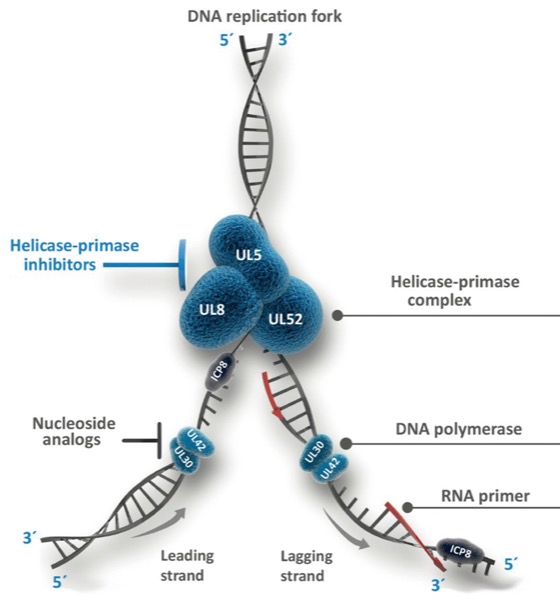 |
| Figure 2. Mechanism of action of pritelivir vs standard antivirals.12
Pritelivir targets the viral helicase–primase complex (UL5, UL52, UL8), blocking viral DNA unwinding upstream of DNA polymerase. In contrast to nucleoside analogs and foscarnet, it does not require activation by viral TK. Because it bypasses this activation step and uses a distinct molecular target, pritelivir retains full clinical activity against both TK-deficient and foscarnet-resistant viral strains.
TK, thymidine kinase. |
Pritelivir is an oral small-molecule helicase–primase inhibitor with potent activity against HSV-1 and HSV-2 in vitro and in animal models, including strains with resistance to acyclovir and related nucleoside analogs.12 Preclinical pharmacokinetic and pharmacodynamic studies demonstrated favorable oral bioavailability, sustained plasma concentrations above antiviral target thresholds at clinically achievable doses, and suppression of HSV replication and lesion formation in murine models of systemic and mucocutaneous infection.12 These characteristics, together with its TK-independent mechanism, provided the rationale for developing pritelivir specifically for the treatment of immunocompromised patients with refractory HSV infection.
Phase 2 Clinical Data
Early-phase clinical data established proof of concept for pritelivir in the immunocompromised setting. In a randomized, open-label phase 2 trial, immunocompromised patients with acyclovir-refractory or resistant HSV infection were assigned to pritelivir (400-mg loading dose on day 1, then 100 mg once daily for ≤28 days) or IV foscarnet (Part A), with a separate single-arm cohort for patients who were acyclovir- and foscarnet-refractory or foscarnet-intolerant (Part B).37
In Part A, complete lesion healing at day 28 occurred in 14 of 15 patients (93%) receiving pritelivir and 4 of 7 patients (57%) receiving foscarnet. Treatment-emergent AEs (TEAEs) leading to drug discontinuation were less common with pritelivir (4%) than with foscarnet (43%).37 In Part B, 5 of 8 patients (63%) with foscarnet-refractory or -intolerant HSV achieved complete healing with pritelivir.37 Although the phase 2 study was small and not powered for formal statistical testing, the results were directionally consistent with subsequent phase 3 findings.
Clinical Development: PRIOH-1
The pivotal PRIOH-1 trial (NCT03073967) was a randomized, open-label, multicenter, comparative study evaluating oral pritelivir in 101 immunocompromised patients with refractory HSV infection, with or without documented antiviral resistance (Table 4).8,31,38,39 Patients were randomized 1:1 to receive either pritelivir or ICT, which could include IV foscarnet, IV or topical cidofovir, or topical imiquimod. Pritelivir was given as a 400-mg loading dose on day 1 followed by 100 mg orally once daily for up to 28 days, with extension to 42 days permitted in patients with ongoing clinical improvement.31 Enrolled patients represented the full spectrum of immunocompromising conditions, including hematologic malignancies, HSCT, HIV infection, autoimmune and inflammatory diseases, and SOT.8 Data for this trial are from conference presentations; full peer-reviewed publications are pending.
| Table 4. PRIOH-1 Phase 3 Trial: Key Efficacy and Safety Outcomes8,31,38,39 | ||||
| Outcome | Pritelivir | Investigator’s Choice Therapy |
Treatment Difference |
P value |
|---|---|---|---|---|
| Primary end point | ||||
| Complete lesion healing, day 28, %8,38 | 62.7 | 34.0 | 28.4 | P=0.0047 |
| Extended treatment | ||||
| Complete lesion healing, day 42, %39 | 82.4 | 42.0 | 40.2 | P<0.0001 |
| Virologic response | ||||
| HSV DNA undetectable in lesions, %39 | 73.7 | 48.7 | 25.0 | P=0.0251 |
| Median time to undetectable HSV, d39 | 9 | 21 | — | P=0.0581 |
| Predefined subgroup: day 28 | ||||
| Oncology/other (nontransplant), %31 | 68.4 | 26.7 | 41.8 (95% CI, 6.7-69.0) |
— |
| Transplant, %31,a | 50.0 | 39.3 | CI crosses 0a | — |
| HIV (post hoc), %31 | 68.8 | 28.6 | 40.2 (95% CI, –7.5 to 73.7) |
— |
| Predefined subgroup: day 42 | ||||
| Oncology/other (nontransplant), %31 | 89.5 | 33.3 | 56.1 (95% CI, 20.3-80.0) |
— |
| Transplant, %31,a | 75.0 | 50.0 | CI crosses 0a | — |
| HIV (post hoc), %31 | 81.3 | 28.6 | 52.7 (95% CI, 6.4-83.1) |
— |
| Safety | ||||
| TEAEs leading to discontinuation, %8 | 2.0 | 20.0 | — | — |
| Drug-related TEAEs, %31 | 21.6 | 54.0 | — | — |
| Serious TEAEs, %31 | 19.6 | 30.0 | — | — |
|
a CIs wide and crossing 0 at both day 28 and day 42, likely reflecting smaller sample size (n=44).31
CI, confidence interval; TEAE, treatment-emergent adverse event. |
||||
The trial met its primary end point: complete lesion healing by day 28 occurred in 62.7% of patients receiving pritelivir compared with 34.0% of those receiving ICT, corresponding to an adjusted treatment difference of 28.4% (P=0.0047; Figure 3).8,38 Among patients who continued therapy, complete lesion healing at day 42 was achieved in 82.4% of pritelivir-treated patients compared with 42.0% of those receiving ICT, an adjusted treatment difference of 40.2% (P<0.0001).39
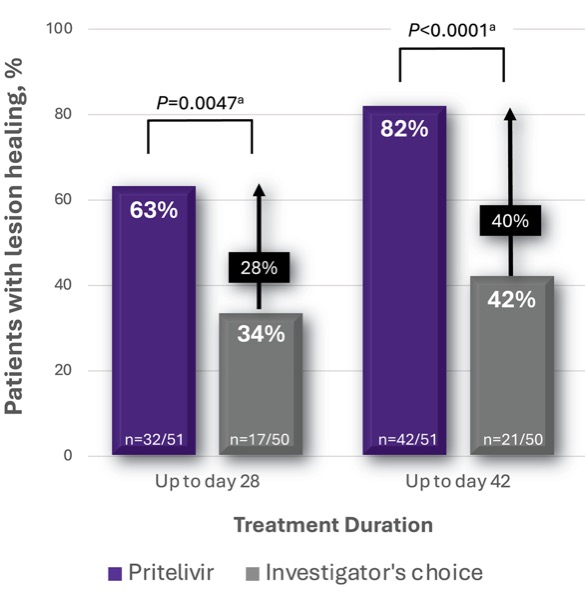 |
| Figure 3. Complete lesion healing rates in PRIOH-1 at day 28 (primary end point) and day 42 (secondary end point).39
Pritelivir demonstrated statistically superior complete lesion healing compared with investigator’s choice therapy at both time points.
a Stratified Cochran Mantel Haensel test adjusted for protocol versions (4.0 and earlier, 5.0 and later). |
HSV DNA became undetectable in lesions during the treatment period in 73.7% of patients in the pritelivir group compared with 48.7% in the ICT group (treatment difference, 25%; P=0.0251).39 Pritelivir also shortened the median time to undetectable HSV in lesions to 9 days compared with 21 days for ICT (P=0.0581; Figure 4).39
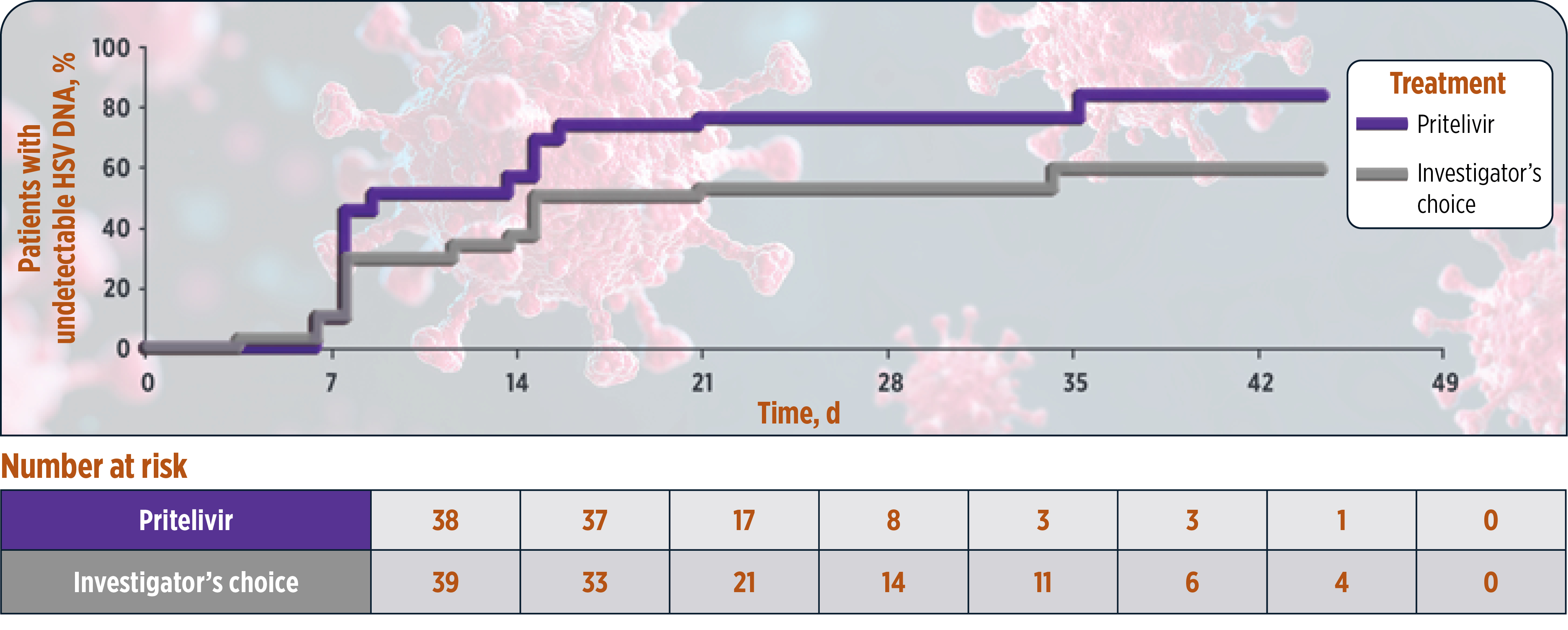 |
| Figure 4. Kaplan-Meier plot of time to undetectable HSV DNA in mucocutaneous lesions.39
Median time to undetectable HSV DNA was 9 days with pritelivir vs 21 days with investigator’s choice therapy (hazard ratio, 1.76; 95% CI, 0.98-3.16; P=0.0581).
Analysis performed on subgroup of patients who had a positive HSV DNA PCR result at baseline. Patients who had positive HSV DNA PCR result at the post-treatment visit were censored at that visit. Patients who had no post-baseline HSV DNA PCR evaluation were censored at the date of first dose. HSV DNA limit of detection ≥150 copies/mL + censored observation.
|
HIV Subgroup
In a post-hoc subgroup analysis of people living with HIV enrolled in PRIOH-1 (n=38, representing 37.6% of the randomized population), pritelivir demonstrated superior lesion healing compared with ICT among evaluable patients: 68.8% (11/16) vs 28.6% (2/7), a treatment difference of 40.2% (95% CI, –7.5 to 73.7).31 The remaining 15 baseline participants were excluded from this end point analysis due to missing or nonevaluable lesion data at the primary assessment window.
Complete lesion healing at day 42 was achieved in 81.3% (13/16) of patients in the pritelivir arm vs 28.6% (2/7) in the ICT arm (95% CI, 6.4-83.1),31 and 96% of patients in the pritelivir arm completed treatment compared with 60% in the ICT arm.39
Other Immunocompromised Subgroups
Predefined subgroup analyses from PRIOH-1 examined treatment response across the 3 major immunocompromising conditions represented in the trial.31 In the oncology/other (nontransplant) subgroup, complete lesion healing rates were 68.4% vs 26.7% at day 28 (treatment difference, 41.8%; 95% CI, 6.7-69.0) and 89.5% vs 33.3% at day 42 (treatment difference, 56.1%; 95% CI, 20.3-80.0). In the transplant subgroup, complete healing rates were numerically higher with pritelivir at both day 28 (50.0% vs 39.3%) and day 42 (75.0% vs 50.0%), although confidence intervals were wide and crossed zero, likely reflecting the smaller sample size in this subgroup (n=44).31
Across all 3 predefined subgroups, including HIV, the direction of effect consistently favored pritelivir. Prospective data are needed.
Safety and Tolerability
TEAEs leading to discontinuation occurred in 2.0% of patients receiving pritelivir and 20.0% of those receiving ICT in PRIOH-1.8 Drug-related TEAEs occurred in 21.6% of the pritelivir group vs 54.0% of the ICT group, and serious TEAEs occurred in 19.6% vs 30.0%, respectively.31 TEAEs of special interest, including electrolyte abnormalities, renal and urinary disorders, skin disorders, and hematologic events, all occurred at lower rates with pritelivir than with ICT.31 The most common AEs reported with pritelivir (each occurring in ≥5% of patients) were headache, diarrhea, nausea, decreased appetite, vomiting, and dizziness.8
Drug Interactions and Use With Calcineurin Inhibitors
Clinical pharmacokinetic studies have evaluated the effects of pritelivir on various cytochrome P450 (CYP) enzymes, specifically CYP3A4, CYP2B6, CYP2C9, CYP2C8, as well as on the intestinal transporters, including the organic anion transporting polypeptide 2B1 and the breast cancer resistance transporter protein (BCRP). These studies demonstrated no clinically relevant effects on CYP enzyme substrates, with only weak inhibition of the intestinal efflux transporter BCRP.12,40 Because calcineurin inhibitors (CNIs), such as tacrolimus and cyclosporine, are metabolized primarily by CYP3A4, pritelivir is not expected to meaningfully alter CNI exposure. Thus, there is no evidence from the available data suggesting that a dose adjustment of CNIs is needed due to a pharmacokinetic interaction with pritelivir.40 Nonetheless, CNI levels should continue to be monitored per standard practice in transplant recipients receiving any new concomitant therapy.
Pediatric Considerations
Prospective efficacy and safety data for pritelivir in pediatric patients are not yet available. The European Medicines Agency approved a Pediatric Investigation Plan for pritelivir in 2021, with pediatric studies deferred pending completion of adult development.41
Regulatory and Expanded-Access Context
Pritelivir received FDA Breakthrough Therapy designation in 2020 based on phase 2 efficacy and safety data. After submission of the New Drug Application in early 2026, the FDA granted Priority Review for the treatment of refractory HSV infection, with or without resistance, in immunocompromised patients, with a target action date in the fourth quarter of 2026.10
In parallel, an expanded access intermediate-size treatment protocol (NCT05844436) has been established in the United States for immunocompromised patients with refractory HSV-1 or HSV-2 who cannot participate in a clinical trial and for whom no approved treatment option is available.32
Amenamevir: Additional Helicase–Primase Inhibitor Experience
Amenamevir is a helicase–primase complex inhibitor approved in Japan for the treatment of herpes zoster and recurrent HSV but not commercially available outside that country.13 Experience with amenamevir in treating HSV, particularly in immunocompromised patients, is limited. Case reports describe successful use in acyclovir-resistant HSV infections after allogeneic HSCT, including in patients with renal dysfunction, for whom foscarnet presented considerable risk.13,42 However, worsening of symptoms and development of CNS infections have also been reported in some patients receiving amenamevir in the immunocompromised setting, and the risk–benefit profile in this population is not yet fully characterized.13 Prospective data are lacking, and pritelivir remains the only helicase–primase inhibitor with prospective phase 3 data in immunocompromised patients with refractory HSV infections.
Case Study: Connie, Refractory Oropharyngeal HSV in an Allogeneic HSCT Recipient

Connie, a 57-year-old woman, presents with a 10-day history of painful, grouped, and coalescent erosions affecting her tongue, hard palate, and buccal mucosa. She underwent allogeneic HSCT 8 months earlier for acute myeloid leukemia and is currently receiving tacrolimus and systemic corticosteroids for chronic GVHD. Connie is HSV-seropositive and has a history of prior mucocutaneous episodes.
Despite escalation of her valacyclovir dosage to 1 g 3 times daily 9 days ago, her lesions have enlarged, becoming more ulcerative, and she is experiencing significant odynophagia with poor oral intake. Lesion PCR confirms the presence of HSV-1, and her renal function is preserved (serum creatinine, 0.8 mg/dL).
Having failed at least 7 days of appropriately dosed nucleoside analog therapy, this case meets the consensus definition of refractory mucocutaneous HSV.5 The medical team transitions Connie to IV foscarnet and sends specimens for phenotypic resistance testing. She is hospitalized for central venous access, aggressive hydration, and monitoring. However, by day 10 of foscarnet treatment, her serum creatinine rises to 1.6 mg/dL, prompting a dose reduction, and she develops symptomatic hypocalcemia necessitating supplementation. Resistance testing results, available on day 12, confirm acyclovir-resistant HSV-1, with preserved foscarnet susceptibility. Lesion healing is incomplete at day 14.
Considering her foscarnet intolerance and persistent disease, the team enrolls her in the pritelivir expanded access program. She transitions to oral pritelivir 400 mg on day 1, followed by 100 mg daily thereafter, and achieves complete lesion healing by day 21.
Key Points
- Persistent HSV lesions despite 7 or more days of appropriately dosed nucleoside analog therapy meets the proposed consensus definition of refractory HSV and warrants escalated antiviral therapy.5
- Resistance testing should be sent at the time of escalation; however, results typically require 2 to 3 weeks, and treatment decisions must be made empirically while awaiting confirmation.5,7
- Foscarnet remains the standard salvage option, but nephrotoxicity and electrolyte disturbances are common, frequently requiring dose modification or early discontinuation, and hospitalization is necessary.20,21,33
- Oral helicase–primase inhibitors represent a mechanistically distinct option that does not require viral TK activation and retains activity against TK-deficient strains.12
- At the time of this publication (August 2026), patients who are intolerant of or have disease refractory to acyclovir or foscarnet may be candidates for the pritelivir expanded access program, which is available for immunocompromised patients with refractory HSV who have no approved alternatives.32
Case Study: Barney, Necrotizing Anogenital HSV in a Patient With Renal Dysfunction
Barney is a 72-year-old man with advanced HIV infection (CD4 count, 50 cells/mm3) who presents with a 3-week history of painful necrotizing ulcers in the perianal and anogenital regions, resembling lymphogranuloma venereum. He has a history of genital HSV and has been intermittently adherent to valacyclovir suppressive therapy. He also has a history of acute kidney injury.
Bacterial cultures are negative but biopsy and PCR testing confirm the presence of HSV-2. Despite treatment with high-dose oral valacyclovir for 10 days and IV acyclovir for 7 days, Barney’s condition does not improve. Phenotypic testing confirms acyclovir resistance. The foscarnet EC50 is within the susceptible range, and baseline estimated glomerular filtration rate (eGFR) is 40 mL/min/1.73 m2.
Cidofovir is contraindicated given Barney’s renal dysfunction,23 and topical agents are insufficient for disease of this extent. The medical team initiates renal dose-adjusted IV foscarnet with aggressive hydration and close monitoring. By day 7, Barney’s eGFR falls to 28 mL/min/1.73 m2, requiring further reduction in foscarnet dosage. Lesions show only partial improvement at day 14 and foscarnet is discontinued at day 17 due to progressive nephrotoxicity. Residual ulcerations persist. Recognizing the need for additional treatment options, the team identifies Barney as a candidate for the pritelivir expanded access program and pursues enrollment, while continuing topical compounded cidofovir as a temporizing measure.
Key points
- Atypical, necrotizing anogenital lesions in an immunocompromised patient should prompt HSV in the differential diagnosis, particularly when refractory to antibiotics.4,15
- Confirmed acyclovir resistance with documented treatment failure meets criteria for refractory HSV; foscarnet remains the only FDA-approved salvage option but is frequently limited by nephrotoxicity, especially in patients with preexisting renal dysfunction.20,21,33
- Chronic kidney disease significantly narrows the therapeutic window for all currently available salvage agents, often forcing early discontinuation and leaving patients with incompletely treated disease.
- This case illustrates the critical unmet need for an oral, TK-independent agent with a renal-sparing profile. Pritelivir, if approved, would represent a meaningful option for patients like Barney who cannot safely complete a full course of foscarnet or cidofovir.12
HSV infection in immunocompromised patients carries a substantial burden of disease, driven by frequent reactivation, atypical and severe clinical presentations, and a heightened risk for antiviral resistance. Prolonged antiviral exposure and impaired cellular immunity create conditions that favor the emergence of resistant strains, while current diagnostic tools remain slow, specialized, and incompletely standardized. Foscarnet remains the only FDA-approved therapy for acyclovir-resistant mucocutaneous HSV but is constrained by nephrotoxicity, electrolyte disturbances, and the requirement for IV administration; complete lesion healing is achieved in fewer than half of treated episodes, and treatment discontinuation due to AEs is common. Cidofovir and other salvage approaches carry comparable toxicity profiles and are supported by evidence that extends little beyond case reports and small retrospective series. Pritelivir, an oral helicase–primase inhibitor active against TK-deficient and foscarnet-resistant strains, demonstrated superior lesion healing and a substantially more favorable tolerability profile than ICT in the phase 3 PRIOH-1 trial, and represents the most significant advance in the management of refractory HSV in immunocompromised patients in decades. Broader access to resistance testing, continued refinement of diagnostic frameworks, and timely integration of emerging therapies into clinical practice will be essential to translating these advances into improved outcomes for a population defined by immunologic vulnerability and limited therapeutic recourse.
- World Health Organization. Herpes simplex virus. Fact sheet. Updated May 2025. Accessed May 30, 2026. www.who.int/news-room/fact-sheets/detail/herpes-simplex-virus
- Bradley H, Markowitz LE, Gibson T, McQuillan GM. Seroprevalence of herpes simplex virus types 1 and 2—United States, 1999-2010. J Infect Dis. 2014;209(3):325-333.
- Sallée L, Boutolleau D. Management of refractory/resistant herpes simplex virus infections in haematopoietic stem cell transplantation recipients: a literature review. Rev Med Virol. 2024;34(5):e2574.
- Allen K, Wang A, Hibdon MA, et al. Atypical presentations of acyclovir-resistant herpes simplex virus in immunocompromised patients: a case series. Cureus. 2025;17(9):e93215.
- Chemaly RF, Shafat T, Wald A, et al. Refractory and resistant herpes simplex virus mucocutaneous infections in immunocompromised patients: literature review and proposed definitions for use in clinical trials. Clin Infect Dis. 2025;81(3):593-601.
- Bacon TH, Levin MJ, Leary JJ, Sarisky RT, Sutton D. Herpes simplex virus resistance to acyclovir and penciclovir after two decades of antiviral therapy. Clin Microbiol Rev. 2003;16(1):114-128.
- Shafat T, Ariza-Heredia EJ, Daher M, Chemaly RF. How we diagnose and manage refractory and resistant herpes simplex virus mucocutaneous infection after haematopoietic cell transplantation. Clin Microbiol Infect. 2025;31(5):761-772.
- Papanicolaou GA, Avery R, Workowski K, et al. Pritelivir demonstrated superior efficacy compared to investigator’s choice treatment for refractory herpes simplex virus infections in immunocompromised patients: PRIOH-1, phase 3 safety and efficacy. Transplantation & Cellular Therapy Meetings of ASTCT and CIBMTR. February 7, 2026; Salt Lake City, UT.
- Debbarma S. AiCuris reports positive phase III pritelivir results for HSV patients. Clinical Trials Arena. February 6, 2026. Accessed February 17, 2026. www.clinicaltrialsarena.com/news/aicuris-positive-pritelivir-results/
- ESCMID Global 2026: Pritelivir excels in immunocompromised refractory HSV patients. Pharmaceutical Technology. April 27, 2026. Accessed June 18, 2026. www.pharmaceutical-technology.com/analyst-comment/escmid-global-2026-pritelivir-excels-in-immunocompromised-refractory-hsv-patients/
- Park JJ. Management of acyclovir-resistant herpes simplex virus infection in patients undergoing hematopoietic stem-cell transplantation. J Hematol Oncol Pharm. 2021;11(4):210-215.
- Birkmann A, Bonsmann S, Kropeit D, et al. Discovery, chemistry, and preclinical development of pritelivir, a novel treatment option for acyclovir-resistant herpes simplex virus infections. J Med Chem. 2022;65(20):13614-13628.
- Birkmann A, Saunders R. Overview on the management of herpes simplex virus infections: current therapies and future directions. Antiviral Res. 2025;237:106152.
- Wang CI, Chen YY, Yang Y, et al. Risk of herpes simplex virus infection in solid organ transplant recipients: a population-based cross-sectional study. Ann Epidemiol. 2024;89:21-28.
- Wauters O, Lebas E, Nikkels AF. Chronic mucocutaneous herpes simplex virus and varicella zoster virus infections. J Am Acad Dermatol. 2012;66(6):e217-e227.
- Workowski KA, Bachmann LH, Chan PA, et al. Sexually transmitted infections treatment guidelines, 2021. MMWR Recomm Rep. 2021;70(4):1-187.
- Vinikoor MJ, Wong YT, Margolis DM. Herpes simplex virus type 2 mimicking necrotizing fasciitis. Ann Intern Med. 2011;155(8):567-568.
- Snow JL, el-Azhary RA, Gibson LE, Estes SA, Espy MJ, Smith TF. Granulomatous vasculitis associated with herpes virus: a persistent, painful, postherpetic papular eruption. Mayo Clin Proc. 1997;72(9):851-853.
- Siberry GK, Abzug MJ, Nachman S, et al. Guidelines for the prevention and treatment of opportunistic infections in HIV-exposed and HIV-infected children. Pediatr Infect Dis J. 2013;32(suppl 2):i-KK4.
- Papanicolaou GA, Lee YJ, Shafat T, et al. Refractory mucocutaneous infections by herpes simplex virus (HSV) in hematopoietic cell transplant recipients: a real-world, multicenter study. Open Forum Infect Dis. 2026;13(7):ofag377.
- Foscavir (foscarnet sodium) injection prescribing information. Wilmington, DE: AstraZeneca. March 2025.
- Safrin S, Crumpacker C, Chatis P, et al. A controlled trial comparing foscarnet with vidarabine for acyclovir-resistant mucocutaneous herpes simplex in the acquired immunodeficiency syndrome. The AIDS Clinical Trials Group. N Engl J Med. 1991;325(8):551-555.
- Vistide (cidofovir) prescribing information. Foster City, CA: Gilead. September 2010.
- Voigt S, Hofmann J, Edelmann A, Sauerbrei A, Kühl JS. Brincidofovir clearance of acyclovir-resistant herpes simplex virus-1 and adenovirus infection after stem cell transplantation. Transpl Infect Dis. 2016;18(5):791-794.
- El-Haddad D, El Chaer F, Vanichanan J, et al. Brincidofovir (CMX-001) for refractory and resistant CMV and HSV infections in immunocompromised cancer patients: a single-center experience. Antiviral Res. 2016;134:58-62.
- Tembexa (brincidofovir) prescribing information. Whippany, NJ: Chimerix, Inc. June 2021.
- Kim JH, Schaenman JM, Ho DY, Brown JMY. Treatment of acyclovir-resistant herpes simplex virus with continuous infusion of high-dose acyclovir in hematopoietic cell transplant patients. Biol Blood Marrow Transplant. 2011;17(2):259-264.
- Fletcher CV, Englund JA, Bean B, Chinnock B, Brundage DM, Balfour HH. Continuous infusion of high-dose acyclovir for serious herpesvirus infections. Antimicrob Agents Chemother. 1989;33(8):1375-1378.
- Lee YJ, Li Y, Han G, et al. 2735. Treatment patterns and clinical outcomes of acyclovir resistant and refractory human herpes simplex virus infection after allogeneic hematopoietic cell transplantation. Open Forum Infect Dis. 2023; 10(suppl 2):ofad500.2346.
- Martinez V, Molina JM, Scieux C, Ribaud P, Morfin F. Topical imiquimod for recurrent acyclovir-resistant HSV infection. Am J Med. 2006;119(5):e9-11.
- Chemaly RF, Peggs K, Neofytos D, et al. Positive treatment response of pritelivir achieved in refractory herpes simplex virus infections in immunocompromised patients, including haematopoietic cell and solid organ transplant recipients, and oncology patients: PRIOH-1 phase 3 trial. ESCMID Global 2026 Congress. April 17-21, 2026; Munich, Germany. Abstract 09485.
- Expanded access intermediate size treatment protocol: pritelivir for immunocompromised subjects with treatment resistant herpes simplex virus type 1 or 2. ClinicalTrials.gov identifier NCT05844436. Accessed May 31, 2026. https://clinicaltrials.gov/study/NCT05844436
- Hammond SP, Rangaraju M, Sumner M, et al. A multicenter assessment of the outcomes and toxicities of foscarnet for treatment of acyclovir-resistant mucocutaneous herpes simplex virus in immunocompromised patients. Open Forum Infect Dis. 2024;11(3):ofae046.
- Berger JI, Anderson AD, Martinez OV, et al. Refractory and/or resistant herpes simplex virus infections after hematopoietic cell transplantation. Cureus. 2026;18(6):e110131.
- Nunn J, Ahmed A, Senthil S, et al. Acyclovir-resistant herpes simplex virus in pediatric patients undergoing hematopoietic stem cell transplantation. Transpl Infect Dis. 2026;28(2):e70162.
- Chemaly RF, Edwards L, Lawrence K, et al. Characterizing the epidemiology of patients with refractory herpes simplex virus (HSV) infections: findings from an electronic health record (EHR)-linked claims analysis. Poster. AMCP Annual Meeting. April 13-16, 2026. Abstract 230.
- Kotton CN, Avery RK, Workowski KA, et al. Efficacy and safety results from the phase 2 clinical trial of pritelivir versus foscarnet for treatment of acyclovir-refractory and/or resistant mucocutaneous HSV infections in immunocompromised subjects. Abstract 233. Open Forum Infect Dis. 2026;13(suppl 1):ofaf695.085.
- Molina JM, Workowski K, Ramgopal MN, et al. Pritelivir for refractory HSV infections in immunocompromised patients: results of a phase III trial. Conference on Retroviruses and Opportunistic Infections. February 25, 2026; Denver, CO. Abstract 196.
- Chemaly RF, Molina JM, Workowski K, et al. Pritelivir demonstrated superior lesion healing with extended treatment compared to investigator’s choice for refractory herpes simplex virus infection in immunocompromised patients in the PRIOH-1 phase 3 Trial. ESCMID Global 2026 Congress. April 17-21, 2026; Munich, Germany. Poster E0203.
- Payne BAI, Molina JM, Workowski K, et al. Pritelivir for refractory herpes simplex virus infections in immunocompromised patients, including people living with HIV: results of a phase 3 trial. 6th Joint Conference of BHIVA with BASHH. April 27-29, 2026; Liverpool, UK. Poster A179.
- de Vries M, Bonsmann S, Pausch J, et al. Evaluation of the clinical drug-drug interaction potential of pritelivir on transporters and CYP450 enzymes using a cocktail approach. Clin Pharmacol Drug Dev. 2024;13(7):755-769.
- European Medicines Agency. Decision P/0458/2021 on the agreement of a paediatric investigation plan for pritelivir (mesylate monohydrate). October 29, 2021. Accessed June 17, 2026. www.ema.europa.eu/en/medicines/human/paediatric-investigation-plans/emea-002180-pip02-19-0
- Kawamura Y, Uchibori N, Arakawa T, et al. Successful treatment of acyclovir-resistant herpes simplex virus infection with amenamevir in a patient who received umbilical cord blood transplantation for T-cell prolymphocytic leukemia. eJHaem. 2024;5(3):616-619.
false
*You must be logged in to see results data.
- Before/after participating in this activity, how confident are you in identifying herpes simplex virus (HSV) reactivation in immunocompromised patients, using appropriate clinical definitions and recognizing the need for diagnostic testing?
- Very confident
- Somewhat confident
- Not very confident
- Not at all confident
Polling question; no correct answer - In immunocompromised patients, approximately what proportion of acyclovir-resistant HSV strains result from thymidine-kinase (TK) deficiency or alteration?
- Approximately 30%
- Approximately 50%
- Approximately 75%
- Approximately 95%
Correct answer: DRationale: TK-deficient or TK-altered mutants account for approximately 95% of acyclovir-resistant strains in clinical practice and are typically cross-resistant to valacyclovir and famciclovir. - Which of the following patients is at highest risk for developing acyclovir-resistant HSV?
- A 45-year-old solid organ transplantation (SOT) recipient on stable maintenance immunosuppression with no prior HSV reactivations
- A 38-year-old with HIV on effective antiretroviral therapy and a CD4 count of 450 cells/mm3
- A 52-year-old allogeneic hematopoietic stem cell transplantation (HSCT) recipient with active graft-vs-host disease (GVHD) on corticosteroids and T-cell–depleting agents
- A 60-year-old receiving rituximab monotherapy for indolent lymphoma
Correct answer: CRationale: HSCT recipients with active GVHD requiring T-cell–depleting agents and corticosteroids represent the highest-risk profile, with acyclovir resistance documented in up to 14% of HSCT recipients. - A 63-year-old man with chronic lymphocytic leukemia presents with a rapidly enlarging, partially necrotic exophytic lesion on the nasal ala that has not responded to antibiotics. Which of the following is the most appropriate next step?
- Repeat bacterial cultures and broaden antibiotic coverage
- Empiric antifungal therapy
- Biopsy and polymerase chain reaction (PCR) testing of the lesion for HSV
- Surgical debridement without further diagnostic workup
Correct answer: CRationale: Atypical necrotizing or exophytic lesions in immunocompromised patients that fail to respond to antibiotics should prompt evaluation for HSV, including biopsy and PCR. HSV can mimic bacterial necrotizing infections, malignancy, and other ulcerative dermatoses in this population. - Which of the following visceral manifestations of HSV may occur in the absence of mucocutaneous lesions in profoundly immunocompromised patients?
- Pericarditis and myocarditis
- Hepatitis, pneumonitis, or encephalitis
- Colitis and small bowel ulceration
- Orchitis and epididymitis
Correct answer: BRationale: HSV can involve the liver, lungs, adrenal glands, and central nervous system in immunocompromised patients, presenting as hepatitis, pneumonitis, adrenalitis, or encephalitis, sometimes without any mucocutaneous findings, which can significantly delay diagnosis. - According to the HSV Resistance Working Group of the Transplantation Associated Virus Infections (TAVI) Forum, which of the following best defines refractory mucocutaneous HSV infection?
- Recurrence of HSV lesions within 30 days of completing a treatment course
- Detection of a TK mutation on genotypic resistance testing
- Lack of clinical improvement in HSV-positive lesions after at least 7 days of appropriately dosed directed antiviral therapy, in the absence of other plausible causes
- Failure to achieve complete lesion healing within 72 hours of initiating antiviral therapy
Correct answer: CRationale: The TAVI Forum consensus definition requires at least 7 days of appropriately dosed directed—not prophylactic or suppressive—antiviral therapy before a diagnosis of refractory infection can be made. Laboratory confirmation of resistance is required for the designation of resistant HSV but not for refractory HSV. - A clinician suspects acyclovir-resistant HSV in an immunocompromised patient and orders phenotypic resistance testing. Which of the following statements about this testing is accurate?
- FDA-cleared commercial assays are widely available and provide results within 48 hours.
- A negative phenotypic result reliably excludes resistance in immunocompromised patients.
- Phenotypic testing is less useful than serology for confirming active resistance.
- Results typically require 2 to 3 weeks and are available only at specialized centers.
Correct answer: DRationale: Phenotypic plaque reduction assays require viable virus and specialized laboratory infrastructure, with turnaround times that typically exceed 2 to 3 weeks. No FDA-cleared commercial HSV phenotypic resistance assay exists, and treatment decisions must often be made empirically while testing is pending. - In the PRIOH-1 phase 3 trial, what was the rate of complete lesion healing with pritelivir at the primary end point (day 28) compared with investigator’s choice therapy?
- 52.1% vs 34.0%
- 62.7% vs 34.0%
- 74.3% vs 41.2%
- 82.4% vs 42.0%
Correct answer: BRationale: Complete lesion healing at day 28 occurred in 62.7% of pritelivir-treated patients vs 34.0% of those receiving investigator’s choice therapy (treatment difference 28.4%, P=0.0047). The 82.4% vs 42% figures represent day 42 outcomes with extended treatment. - Which of the following most accurately describes what makes pritelivir mechanistically distinct from all currently available salvage therapies for resistant HSV?
- Pritelivir inhibits viral DNA polymerase and requires TK activation, providing higher potency than acyclovir
- Pritelivir is an oral helicase–primase inhibitor that does not require TK activation and retains activity against both TK-deficient and foscarnet-resistant HSV strains
- Pritelivir is an IV pyrophosphate analog that inhibits DNA polymerase without requiring TK activation
- Pritelivir acts as an immune response modifier that enhances local antiviral immunity without direct antiviral activity
Correct answer: BRationale: Pritelivir targets the viral helicase–primase complex (UL5, UL52, UL8), bypasses TK activation entirely, and retains activity against TK-deficient and foscarnet-resistant strains. It is oral and well tolerated—a combination of properties not shared by any currently approved salvage agent. - A 72-year-old man with advanced HIV (CD4 count 50 cells/mm3) presents with necrotizing perianal and anogenital HSV-2 lesions confirmed as acyclovir-resistant with preserved foscarnet susceptibility. His eGFR is 40 mL/min/1.73 m2. He is initiated on renal dose-adjusted IV foscarnet; by day 7 his eGFR falls to 28 mL/min/1.73 m2 and foscarnet is discontinued at day 17 due to progressive nephrotoxicity with residual ulcerations persisting. Cidofovir is contraindicated given his renal dysfunction. Which of the following represents the most appropriate next step?
- Reinitiate foscarnet at a further reduced dose and accept ongoing nephrotoxicity risk
- Initiate high-dose continuous IV acyclovir infusion as definitive salvage therapy
- Refer for evaluation for the pritelivir expanded access program, with topical compounded cidofovir as a temporizing measure
- Transition to oral valacyclovir suppressive therapy and monitor for spontaneous resolution
Correct answer: CRationale: This patient has failed the only FDA-approved salvage option and cannot receive cidofovir due to renal dysfunction—the scenario that defines the critical unmet need in this population. Pritelivir, available through expanded access protocol NCT05844436 for immunocompromised patients with refractory HSV who have no approved alternatives, is oral, TK-independent, and has a renal-sparing profile. Topical compounded cidofovir serves as a bridge while enrollment is pursued.
false